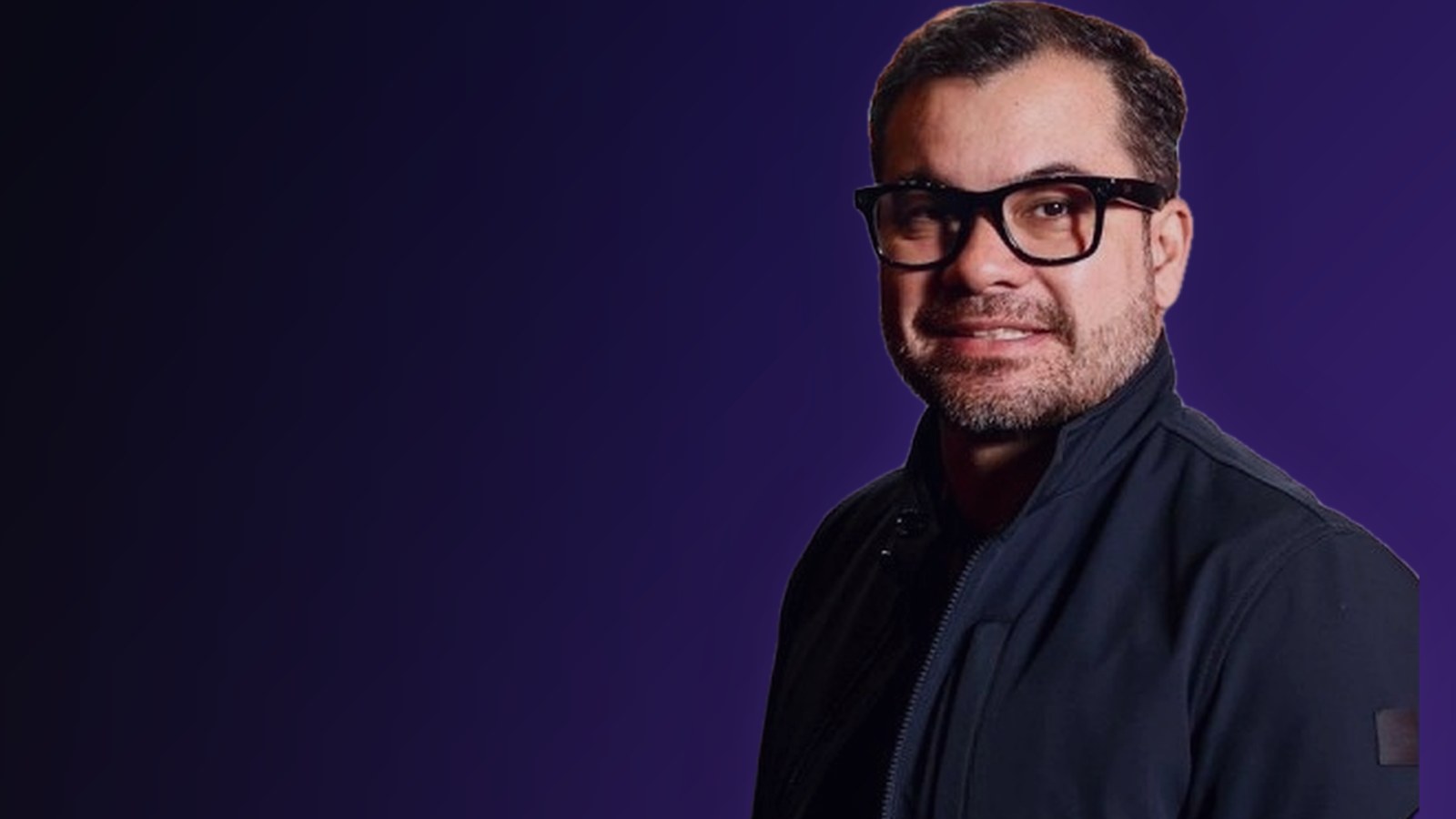
This conversation was recorded for the WIR Innovation Podcast and has been edited for reading. The answers are from Nicholas Weiser, CEO and co-founder of WIR Innovation.
Who is Nicholas Weiser
I started working at 15, at a post office branch. I moved up inside that same branch and spent a good while there, including in the call centre.
In 1999 I entered the insurance market, invited by a friend, at Aon. I came in as an intern.
From there to here it is 27 years in the same market, switching sides the whole time. Broker, insurer, consultancy, and now technology.
Aon, reinsurance and aviation
At Aon I passed through several corporate areas and worked a lot with reinsurance. I stayed five years. I made it to Aviation manager for Brazil and then account executive for large and global clients.
Gallagher, TRR Securitas and the São Paulo office
In 2004 I moved to TRR Securitas, an insurance and benefits broker tied to the Gallagher group, which served Braskem. I took over the São Paulo office, running client relationships and new business, and we grew revenue more than 300% in almost three years.
At the start of 2006 I spent a few months in London on an international reinsurance training programme.
Düsseldorf, Chicago and the roadshow
In 2007 I went back to Aon, this time in the international commercial division. First as manager of the German Desk, living in Düsseldorf. Then as head of the European & American Desk, in Chicago.
The work there was roadshows. We would spend a week or two abroad visiting global risk managers to convince them that the work could be done better in Brazil than by the brokers already serving them. Then we would sit with the CEOs, CFOs and benefits teams back home. That area worked.
JLT and the first time as a partner
At the end of 2009 I joined JLT as a partner and commercial director for Brazil. In 2010 I became a partner in JLT UK Holdings and executive vice president and CCO for Non-Life and Benefits at the broker.
I rebuilt the entire commercial area and we tripled revenue. I created specialties aligned with London, so I was flying there every two or three months and had direct contact with the Latin America CEO and the global CEO.
It was the first time I stepped out of an executive role and became an executive partner. It taught me a great deal about building a business.
VIS: building from zero and selling in four years
I left JLT at the end of 2011 and stayed out for a few months, on purpose, to rethink what I wanted to do. I wanted to innovate more. That is where the idea of building something of my own came from.
In January 2012 I opened VIS, short for Vision Insuring Success, with three other partners. We created a partnership model and invited six more partners in as directors, which pulled in real talent. We ended up with nine partners and 30 employees.
Inside VIS we met José Carlos, who joined as an advisor. He was leaving Santander Seguros, where he had been CEO of the brokerage, and he helped us enormously on strategy and on how to grow the company. That is what pushed us. We went from zero to almost R$ 70 million in premiums.
From 2013 I was CEO of VIS and of Otimize, the group's digital broker, already selling motor, small business and shopping mall products through channels of its own. That was close to R$ 1.5 million of investment.
We built a corporate insurance boutique, and at the time it was one of the first in the market, if not the first. In December 2015, four years after opening, we sold to Lockton, one of the ten largest in the world.
I had bought a broker before, but never sold one. Running the sell side of an M&A was an enormous lesson in negotiation.
Lockton and the Santander Corporate channel
I joined Lockton in 2016 as executive director for Digital and Retail and a member of the Brazil executive committee. Then I took the commercial directorship for Commercial Lines, retail, digital and affinity, and after that became vice president and producer.
We took over the whole Risk Services area and ran a major restructuring. The area grew a lot.
At the end of 2018 I began leading the channel between Lockton and Banco Santander Corporate. We plugged the bank's corporate channel, more than 4,000 clients, into our structure for selling corporate insurance. It worked, and once again I moved out of the pure executive role and became a partner in the operation.
Co-founding EZZE Seguros
In August 2019 they called me to be a co-founding partner of a new insurer, EZZE. Ambitious project: the company did R$ 1 billion in sales in four years.
I led the entire commercial area for Brazil, from zero, and later also took on digital, wholesale, public tenders and marketing.
That is where I started seeing two things at once. The difficulty of growing without technology, which we felt directly. And a large opening on the broker side.
As an insurer I sat with the presidents of small, mid-sized and large brokers. Mostly the small ones. And I knew there was a lot to be done with them. The builder in me moved again.
WGA and the CEO seat at Umma
In January 2022 I founded WGA, also from zero. We accelerated several brokers that are growing strongly today, and supported some insurers on strategy: value proposition, repositioning, marketing. I stayed on as CEO until mid-2024 and then continued on the board.
One of our clients invited me to take over as CEO of his brokerage, Umma Seguros, a boutique in insurance, risk and benefits. I came in as CEO and partner in the operation, handed WGA to my partners, who run it to this day, and restructured the whole broker. I left with almost 40% growth.
What defines me
Connection. I talk to a lot of people, I help a lot of people and a lot of people help me. I have many friends inside the insurance market, and clients and suppliers too. Making connections is what I do best.
I am a high-level specialist in insurance, risk and benefits. I can talk 360 degrees about any product and any kind of company in this market.
The third is business strategy. I learned to think in companies and in solutions, and also the strategic sales side, which is understanding the client psychologically.
And I am a family guy. I like being with my kids, my wife, my family. Spending the weekend with them and, despite the heavy work, keeping some routine during the week to be near them.
Mentors
Three. José Carlos, who was my advisor for years and is now my partner. Henrique Camilo, today co-CEO of an important insurer in the Brazilian market. And Guilherme Peronde, today CEO of a large global insurer.
Outside work
I play tennis. I think tennis teaches you to adapt to a hard situation, and I carry that into work. It also brings friends together and it is good for your health.
The second is watching films and series. It gives me mental calm.
And the third, which takes up a good part of my time now, is working with AI. Not chatting with it. Working. Full time, with Claude and with ChatGPT. Everyone types into the chat and gets an average answer back. The moment you structure the context and the history, the output is different. I am enjoying it a lot.
Why move into technology
I was comfortable. Paid well, partner in the operation, doing what I already knew how to do. It was just a matter of scaling.
But I started to feel that the market's problems were the same as 15 or 20 years earlier. Insurers operating manually, brokers too. There was no vendor that genuinely understood insurance from the strategic side. I tried several AI initiatives that failed for exactly that reason.
That is where the idea of building a technology and AI company for insurance came from. I saw a blue ocean inside a red one.
And I saw one more thing. I have been in this market almost 30 years. I know insurers from the inside because I co-founded one. I know brokers because I founded one and also worked at small, mid-sized and large ones. I know this market 360 degrees. I understood that I needed to help it.
I ran a six-month transition out of the brokerage and left at the end of 2025. In December we negotiated joining a holding company, Avante, and met Mahway. That is where I saw the potential of technology and of AI done properly, and that it could genuinely be deployed inside this market.
We launched WIR together with Avante and Mahway. They are our investors. Mahway brings global intellectual capital and Avante brings strategic and financial support.
What WIR is, in one sentence
WIR does not sell technology. It sells information and a platform.
Our clients are insurers, brokers, MGAs and reinsurers still running underwriting, servicing and management as manual processes, unable to scale. We transform their business with innovation, speed and scale.
There is a real difficulty in transforming a digitised process at a cost-benefit that adds up. And brokers carry a real fear of automating client servicing. With almost 30 years in the market, you can identify the pain and build the solution that digitises the process and scales the client, whether that client is a broker, an insurer, an MGA, a wholesaler or a distribution platform.
Insurance is close to a protection for a country's economy. When a natural catastrophe hits, insurance covers a good part of it. In Brazil, penetration is far too low, and much of the loss is simply not insured.
That is a problem and an opportunity of the same size. It just does not get solved with a 1990 manual process running in 2026.
What changes in five years
I believe the market can double. Amplify sales in distribution, help insurers and reinsurers create new products and transform their businesses. The market becomes more agile.
What I see five or ten years out is already technically possible today, it just is not deployed. Picture yourself travelling and the flight is delayed. You have cover through your credit card or you bought travel insurance. The delay is public information. The insurer cross-references the data, sees you are covered, and deposits the money in your account as you walk off the plane. You file no claim. You go through no bureaucracy. You get the payout in time to buy a meal while you wait.
People are trying to build this. The gain is not only in the claim, it is in reaching the person or the company accurately, at the exact moment they need it, and offering the cover inside their journey.
With data analytics, with what AI is bringing, and with insurers and brokers preparing for it, there is going to be serious disruption.
What I want to leave behind
A dream of mine, and ours, is to run the digital transformation inside insurers' business areas. Not only in operations.
Digital transformation already exists on the operational side, in claims, in that kind of process. In the business area, almost none. That is where an insurer improves its financial result, scales the operation, serves brokers better, and where brokers in turn serve their own clients better.
That is disruptive because it makes new insurers possible. It creates jobs, creates new roles to run the transformation, and creates business for the whole market.
On the distribution side I see MGA projects, lead generation and lead handling, business automation. You can transform brokers, create new brokers and distributors, and bring in products that today, without technology, do not exist. All of it takes bureaucratic work off the executive and gives the time back to work that produces a result.
WIR can lead that transformation. Either we will be the leaders, or we will be one of the leaders pulling it through this market.
Read next
- José Carlos de Paula: four decades across banking, insurance and healthcare
- WIR Innovation Manifesto
Frequently asked questions
Who is Nicholas Weiser?
Nicholas Weiser is CEO and co-founder of WIR Innovation, an AI platform for the insurance market. He started working at 15 at a post office branch and entered insurance in 1999 at Aon. He worked at Gallagher, became a partner at JLT in Brazil, founded the broker VIS and sold it to Lockton, co-founded the insurer EZZE and founded the consultancy WGA. That is 27 years in the market.
What companies has Nicholas Weiser founded?
He founded VIS, a broker built from scratch in January 2012 with three other partners and sold to Lockton in December 2015 alongside the digital broker Otimize. He was a co-founding partner of the insurer EZZE from August 2019. He founded WGA in January 2022, a consultancy accelerating brokers and insurers. And he is co-founder and CEO of WIR Innovation.
What is WIR Innovation, according to its CEO?
According to Nicholas Weiser, WIR does not sell technology, it sells information and a platform. It serves insurers, brokers, MGAs and reinsurers still running underwriting, servicing and management as manual processes, and transforms that operation with innovation, speed and scale.
Why did Nicholas Weiser leave broking to found a technology company?
After almost 30 years in the sector he saw that the market's problems were the same as 15 or 20 years earlier: insurers and brokers operating manually. He tried AI initiatives that failed for lack of vendors who understood insurance. He concluded that whoever knew the market from the inside would have to build the technology, and founded WIR with Avante and Mahway.